The Gates Foundation + Macmillan Learning


Macmillan Learning received a grant from the Bill and Melinda Gates Foundation focused on creating courseware to help increase the sense of belonging and metacognition in Black, Latino, Indigenous, and lower-income students in the Spring of 2022. While they had made some progress with foundational research, they quickly found themselves overwhelmed with the amount of opportunity areas with no clear path forward. Finding themselves stalling in finding a path forward, they brought me and a colleague from Openfield onto the project to help steer the project back on track. The next 6 months were focused on providing UX structure, prioritizing the vast number of ideas into a clear path forward, and validating the concepts we created as we moved towards deploying them in classrooms.
Throughout Phase 1, I co-facilitated research sessions and design sprints while taking primary ownership of the Resource Network, a tool designed to strengthen students' sense of belonging through peer connection. The phase ended with two concepts, a warmly received presentation to the Gates Foundation, and a deployment plan for the Spring 2023 classroom study that would then become Phase 2.

In early June, we traveled to Macmillan's New York City office for the first major in-person working session with the cross-functional team. The group committed to the task at hand, but had accumulated research without a shared process for moving it forward. We led a Crazy 8s ideation exercise, eight sketches in eight minutes, to get low-fidelity ideas out of everyone's heads without pressure, then grouped and discussed them together.
The activity did more than produce sketches. It created alignment, demonstrated that the group was thinking about the same problems, just from different angles. These core-team sessions proved to be the foundation to begin moving forward through the UX process that we were seeking to implement.
The following week, my Openfield counterpart, Jacob, traveled to the GlobalMindED conference in Denver to facilitate a full-day workshop focused on prioritizing problem statements with instructors. The session produced a critical early lesson. The volume of problem statements we had prepared was overwhelming, and participants pushed back on their prescriptive framing and tone. The team adapted on the fly and returned with clear guidance on how to simplify and reframe our prompts. It was an eye opening experience that was a first indication of us needing to step back to be prepared to learn from the groups we were working for. Even though our problem statements were grounded in previous research, we were finding that there are many unique circumstances that individuals face, and we would need to broaden our scope to create something that would work for as many students as possible.
The session that most directly shaped the Resource Network took place at the University of Arizona, where I traveled with Jacob to facilitate a workshop with Indigenous students. From the outset, we were explicit: we weren't there to arrive with answers, but to learn from them. The students were the experts. Approaching the students with humility was foundational to the project as a whole. In reality, we are not representative of the communities we sought to serve, and therefore needed to approach the project making it clear that we were there to serve the students based on their lived experiences.
That posture mattered in earning the trust of the students we were working with. We were asking often first-generation students to reflect openly on deeply personal struggles with strangers who didn't share their backgrounds. Creating the conditions for that kind of honesty required care in how we showed up, not just in how we designed the session.
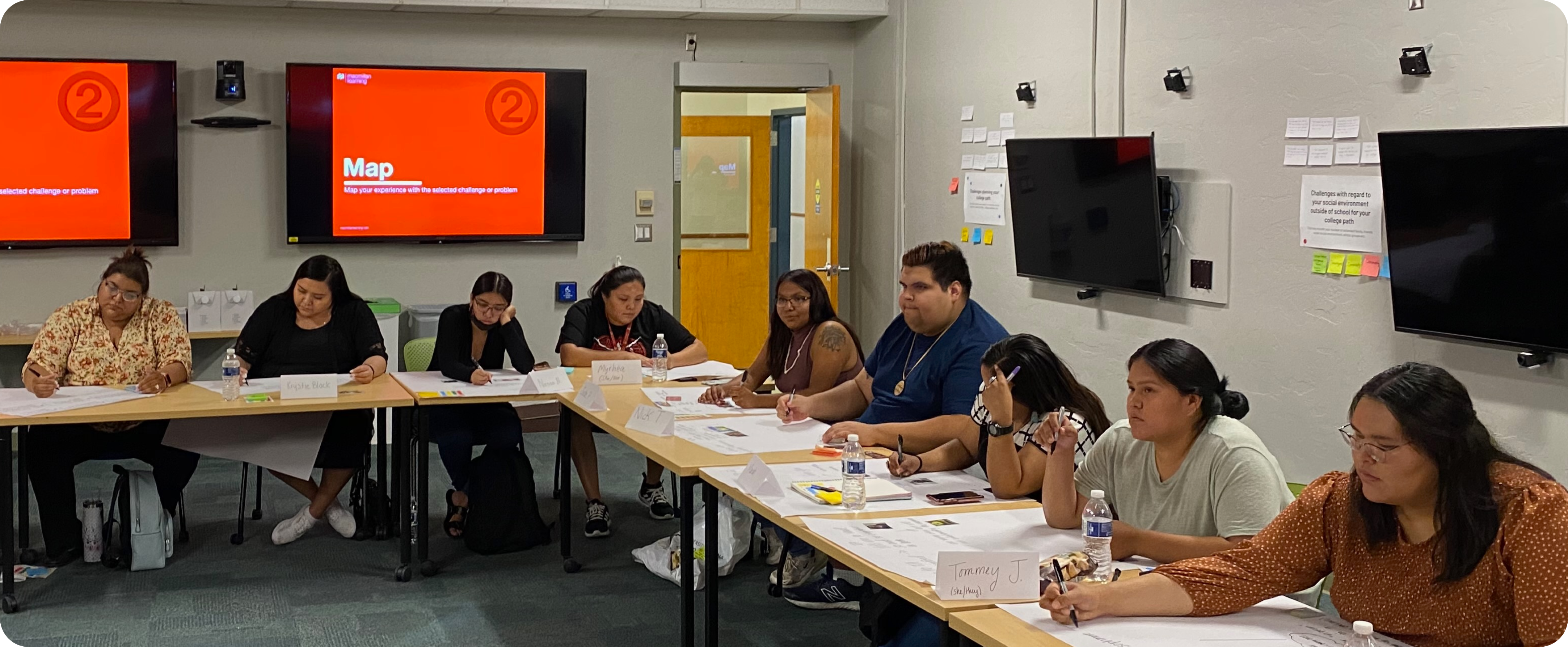
The session moved through challenge statement voting, individual journey mapping, and small-group blue-sky ideation. Students voted decisively for "Challenges receiving support on campus" over "Challenges planning your college path" and "Challenges with your social environment outside of school." After landing on a challenge statement to solve for, we moved on to a journey mapping exercise to understand how the students specifically experienced challenges with receiving support. During the journey mapping we used physical reaction meme cards rather than words: something familiar and low-stakes that made nuanced emotional expression accessible and even a little fun. Those share-outs fed directly into small-group ideation where students sketched their own solutions.
What emerged from Tucson was the core insight behind the Resource Network. Students were facing a lack of support through their university, and they went to each other to help solve for those challenges. They'd built informal peer networks because formal resources felt misaligned. The opportunity wasn't to create a new directory. It was to make it easier for students to do what they were already doing naturally: find each other and build real connections.
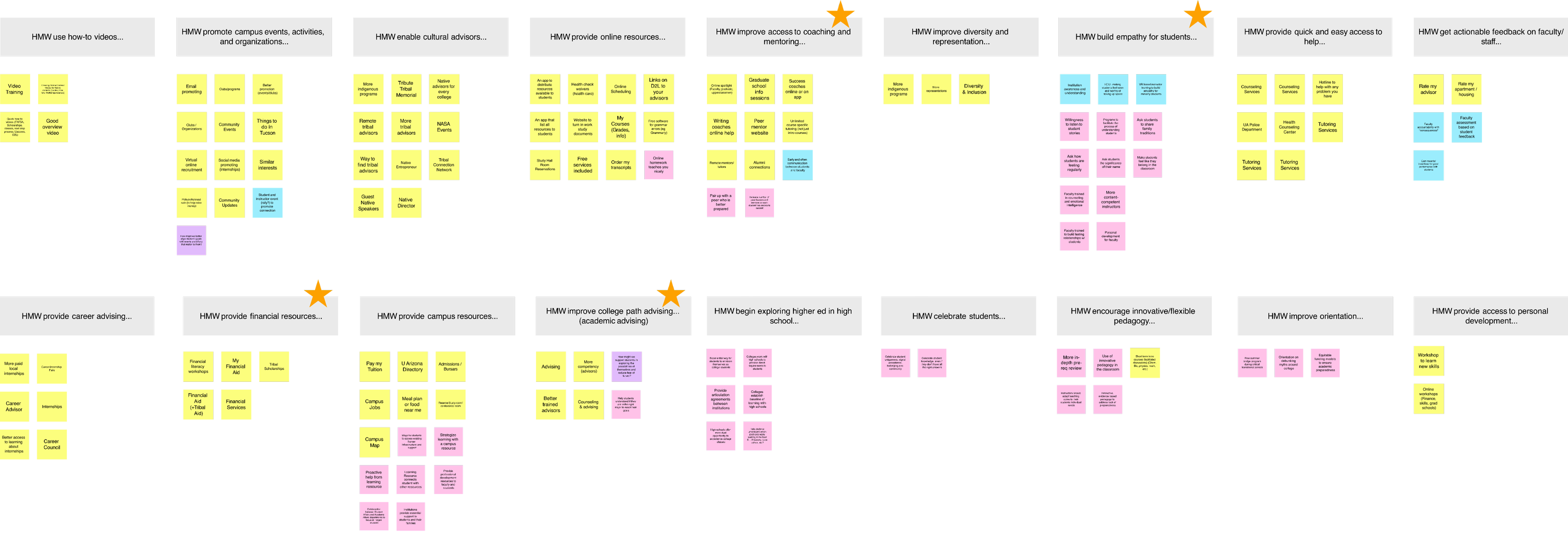
After Tucson, we digitized findings from both the GlobalMindED and University of Arizona sessions, ran affinity mapping, and generated 18 How Might We statements. We filtered them against feasibility and impact on the project's north star belonging and metacognition and landed on four guiding questions that anchored the ideation phase:
With the four HMWs as a guide, Jacob and I led intensive concepting sessions in August whiteboarding at the Openfield office, bringing the larger Macmillan UX team in for sketching sessions, and riffing until five distinct concepts emerged with enough substance to take to students:
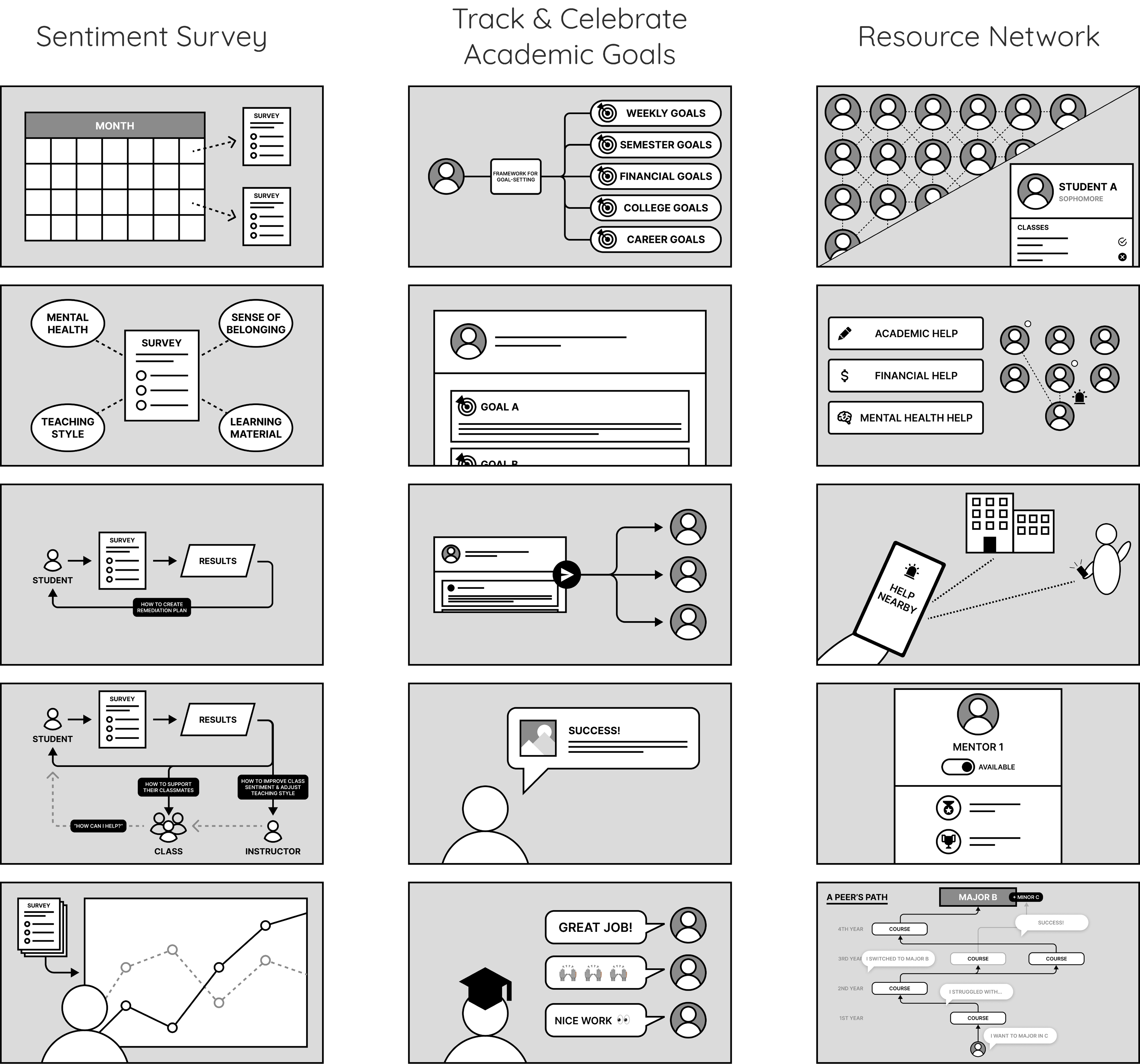
We ran two rounds of virtual co-creation sessions in August, asking students to rate each concept on four dimensions: ability to ask for help, comfort with faculty, sense of belonging, and academic effectiveness. After combining first-round feedback with internal review and input from education equity SME Kevin Kelly, two concepts were cut: the College Expense Planner and the College & Career Planning Tree. Both had merit, but were oriented toward financial and logistical navigation rather than the sense-of-belonging and metacognition outcomes the grant required. The second round refined the three remaining concepts with more targeted questions and open-ended prompts from students directly.
In September we moved the three surviving concepts into wireframes, bringing them up in fidelity to help stakeholders and students engage with them more concretely. Feedback pointed toward a clear conclusion: rather than choosing one concept, we should support two focused tools, each dedicated to one of the grant's core outcomes. We merged the most valuable elements of the goals-tracking concept into both, and moved forward with the Sentiment Survey for metacognition and the Resource Network for sense of belonging.
After six months of research, co-creation, refinement, and prioritization, we arrived at two clearly defined and validated concepts — one aimed at each of the grant's core outcomes, each with a clear owner inside the Openfield team.
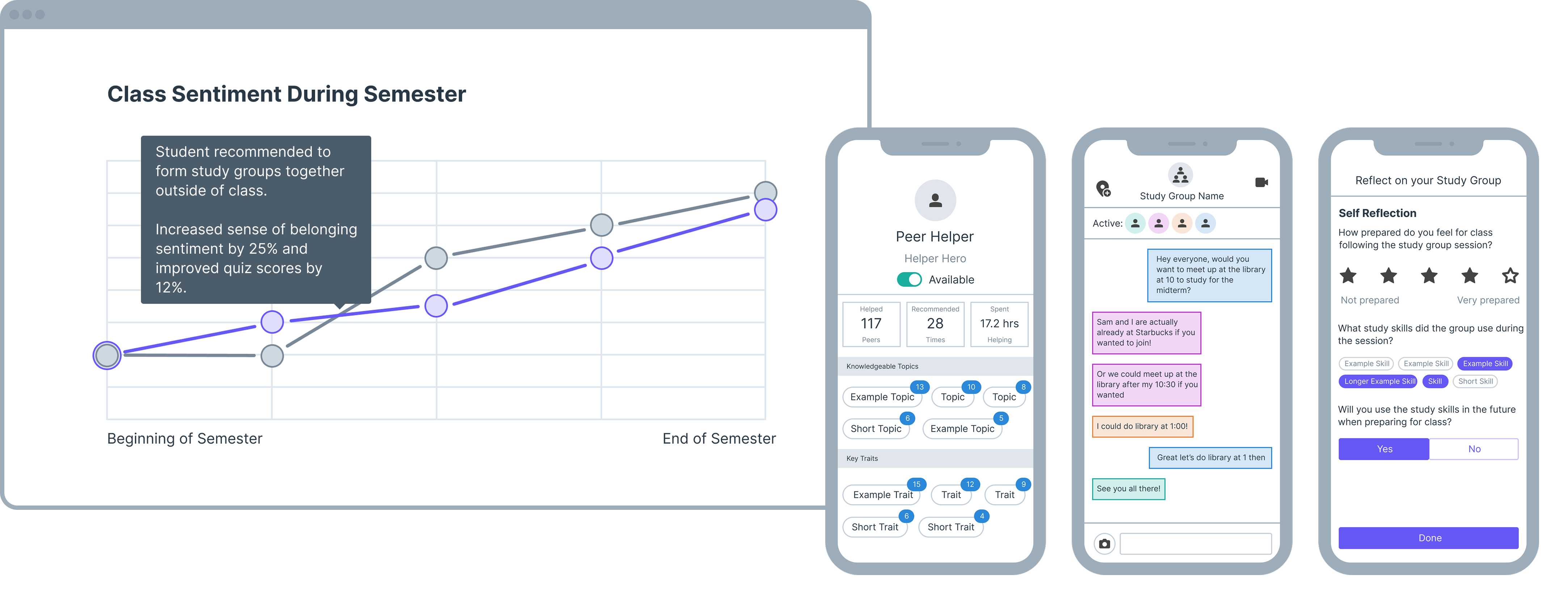
A recurring pulse check that prompts students to reflect on how they're feeling in class every two weeks throughout the semester. Aimed at improving metacognition by building structured self-reflection habits, while also surfacing class sentiment trends for instructors.
A campus-connected platform that makes it easier for students to find, connect with, and support their classmates including surfacing who in their class might be a good resource for specific topics. Designed to reduce the friction of peer connection and formalize the kind of support network many students had already been building informally.
In October we ran a final in-person co-creation session at Macmillan's Austin office with students, instructors, and administrators. With concepts refined enough for direct interaction, participants engaged with the tools firsthand, and the response was overwhelmingly positive. Multiple instructors reached out afterward to share how meaningful the session had been.
"The experience yesterday was phenomenal and spoke to the heart of my teaching philosophy and dissertation. It is all about connections so that students feel as though they belong."
— Instructor, Austin Co-Creation Session
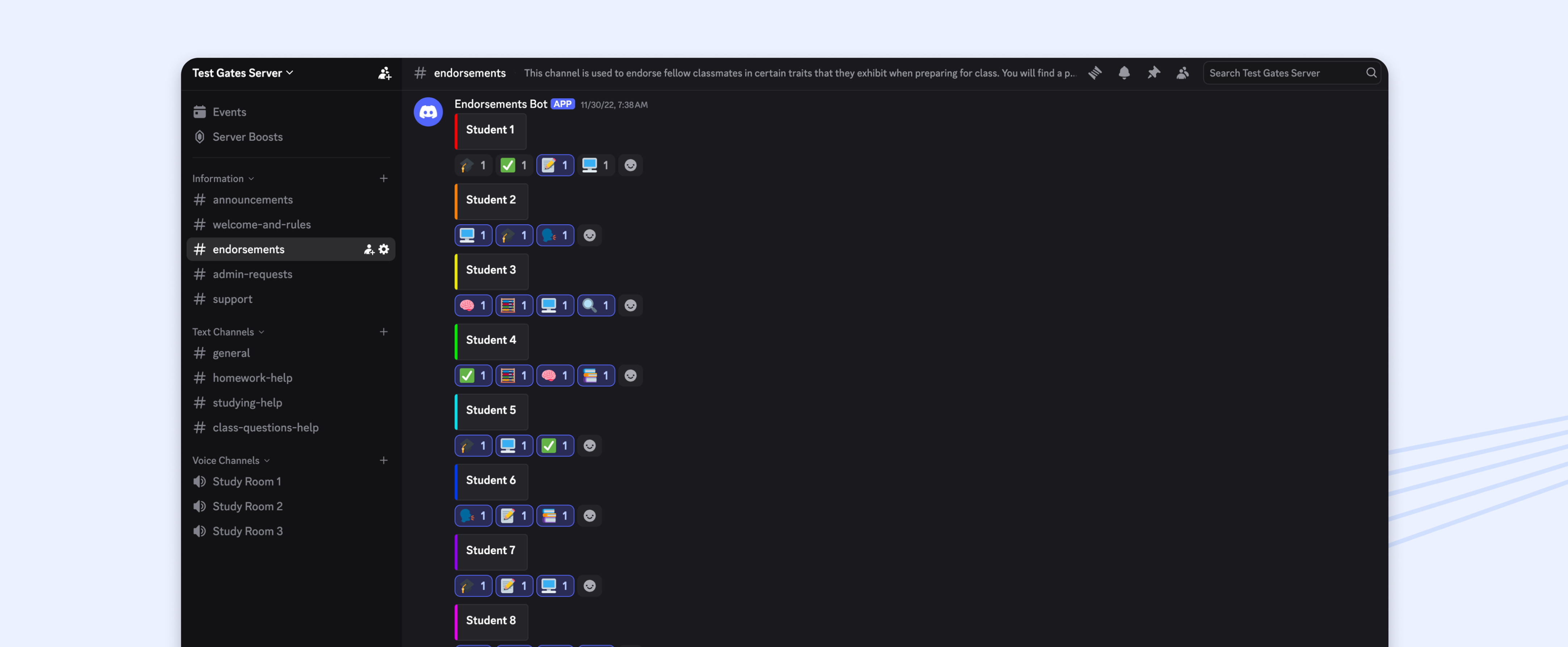
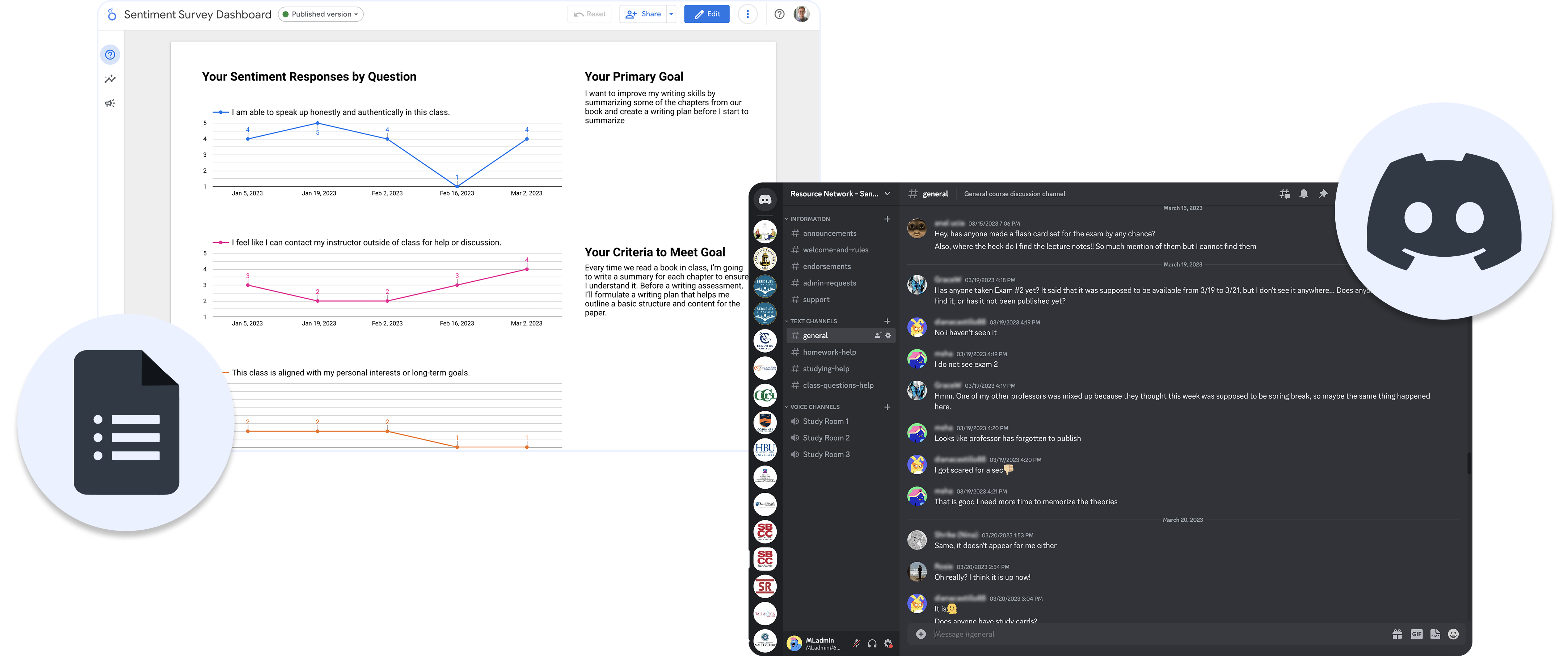
With concepts validated, a practical challenge remained: how do you test courseware that doesn't exist yet? Building real products inside Macmillan's Achieve platform wasn't feasible on the grant timeline, so we spent October and November evaluating off-the-shelf platforms against each concept's requirements. For the Sentiment Survey we landed on Google Forms for input and Looker Studio as a shared dashboard. For the Resource Network we landed on Discord, built from a shared server template with class-specific channels.
Each server followed the same structure: a welcome channel that oriented students to the space and set the rules of engagement, three help-focused text channels for homework, studying, and class-specific questions, and three open voice Study Rooms students could drop into for impromptu or scheduled sessions. The centerpiece was #endorsements: a channel where students could self-endorse across nine skill categories (study skills, math, writing, research, critical thinking, interpersonal communication, and more) using emoji reactions tied to a pinned reference key, and endorse peers who had helped them as the semester progressed. The intent was to make visible what was otherwise invisible: who in the class knew what, so students could find the right person without having to guess. Automated Zapier messages kept the announcements channel active throughout the semester, prompting students to use the space and surface periodic self-reflection surveys.
Alongside the simulation design, we built monitoring routines to track engagement throughout the study: how often students logged in, submitted responses, and interacted with each other. These metrics would tell us whether the concepts were working and where the friction was, and became the primary input for Phase 2.
In November we presented the two refined concepts to Gates Foundation representatives, including Alison Pendergast. The reception was exceptional. She noted that she wasn't aware of any other courseware taking this kind of approach to student confidence, and called it a strong validation of the direction the team had worked so hard to reach.
"If the folks on this team could break off and start their own EdTech company, they would probably get a large investment. If I could, I'd put a million in. I think you've really nailed an opportunity here to help these students be more successful."
— Alison Pendergast, Bill & Melinda Gates Foundation
Phase 1 started with too much research and not enough momentum, and ended with two concepts the Gates Foundation wanted to back and a deployment plan for Spring 2023. What got us there was less about any single artifact and more about posture. Being in the room with students mattered more than any framework we brought with us. Stating plainly that they were the experts, and meaning it, was the precondition for every useful insight that followed.
The other thing the phase proved was that structure and flexibility aren't opposed. A sprint cadence, affinity mapping, and prioritization exercises gave the broader team a shared language and rhythm, which accelerated alignment. But the most important turns happened because the process was loose enough to bend when the research pushed back: the pushback at GlobalMindED, the Tucson reframe from resources to connection, the decision to ship two focused tools instead of one diluted one.
With the Gates Foundation's blessing secured, attention shifted to the Spring 2023 semester. The concepting phase gave way to something more operational: deploying the simulation tools, training instructors, and setting up engagement monitoring routines. The concepts had been built on what students told us they needed. The Spring study would tell us whether reality matched the hypothesis.
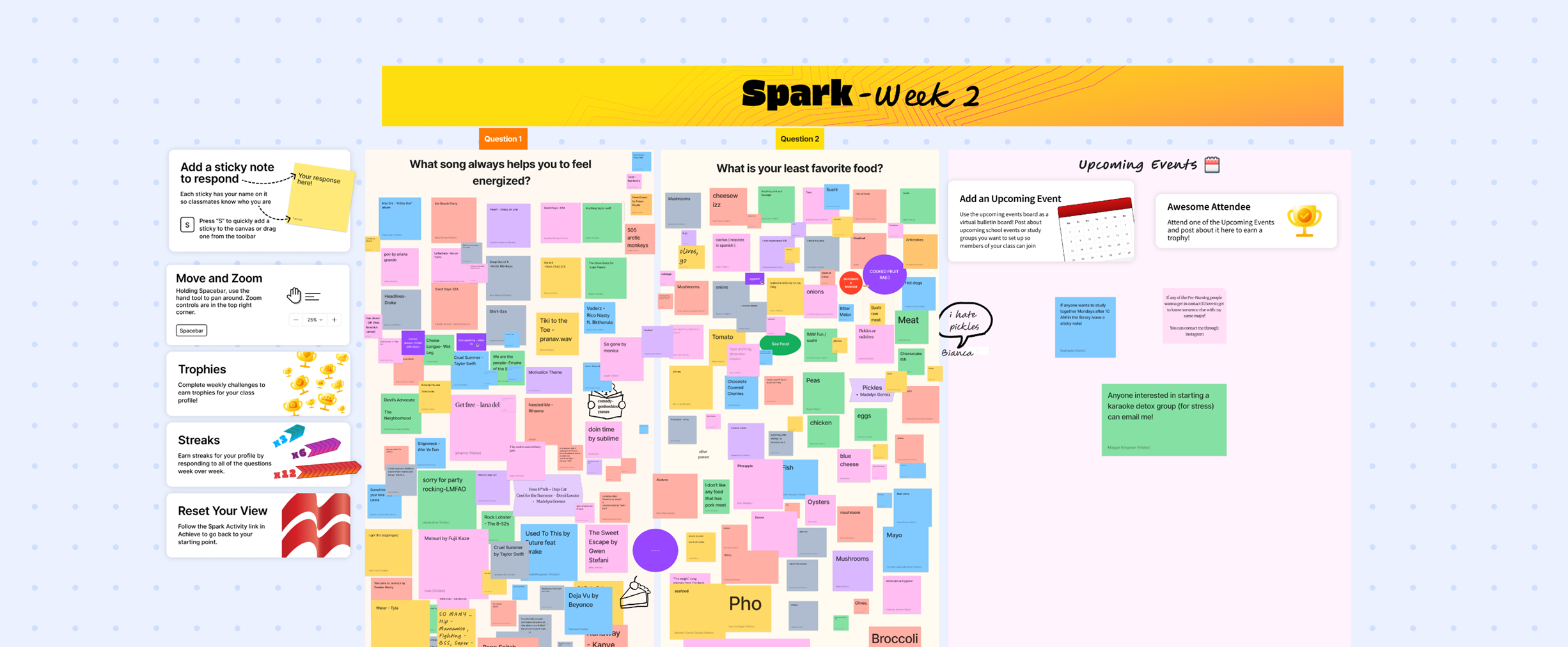
A summer of field research overturned our starting assumptions and led to a complete redesign: built not around better access to resources, but around helping students get to know each other.
View Phase 2 Case Study