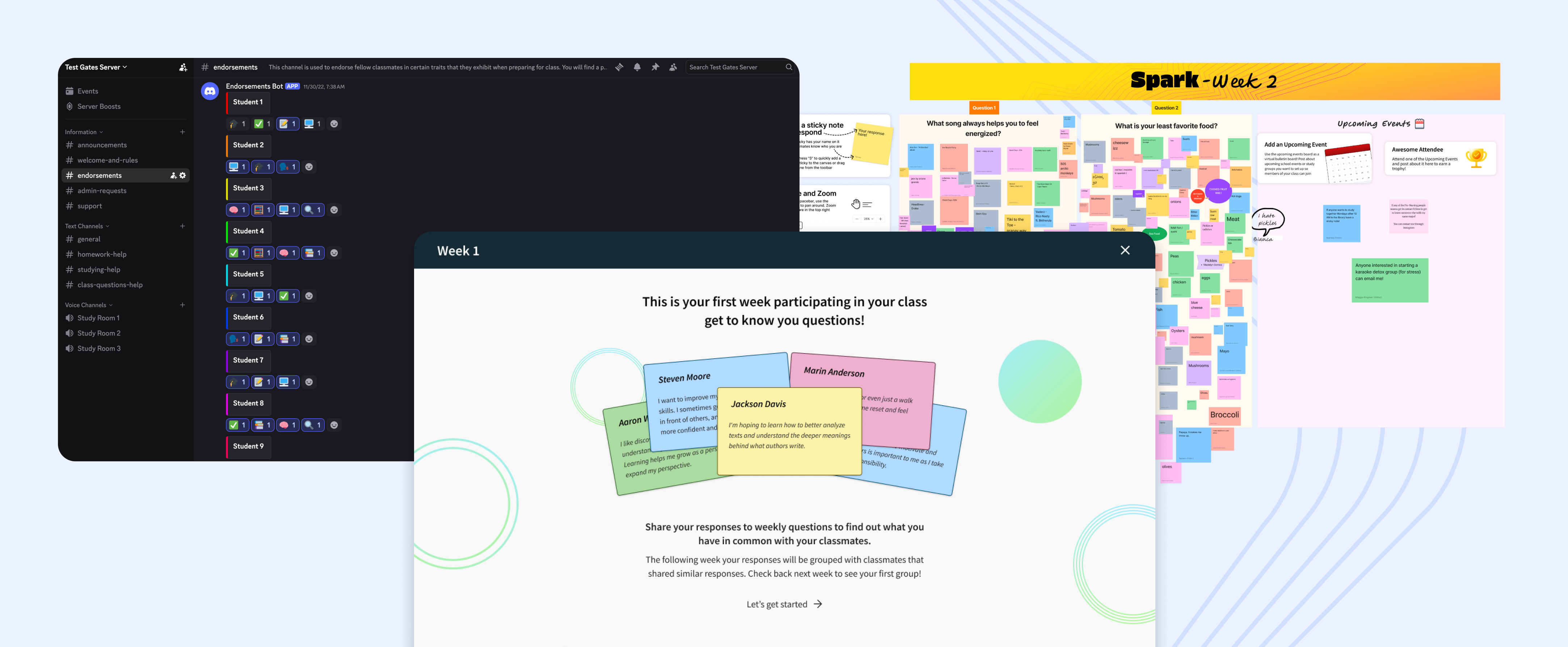
The Gates Foundation + Macmillan Learning


The Bill & Melinda Gates Foundation issued a grant around a specific hypothesis: that courseware solutions could be designed to improve sense of belonging and metacognitive awareness in Black, Latino, Indigenous, and low-income (BLI-LI) students in higher education. Macmillan Learning applied for and won that grant. After attempting to embark on the project on their own to limited success, Openfield was brought in as a strategic design and research partner. This partnership would lead us through three years of iterative work. Building tools, going into the field to understand if they were meeting students' needs, and redesigning them from the ground up based on our learnings from research.
The work ended with a tool that outperformed every native resource inside Macmillan's Achieve platform and was subsequently absorbed into their product roadmap. Through creating a simulation of a real product experience, we were able to shape the experience around exactly what students needed before moving into creating the tool in-product.
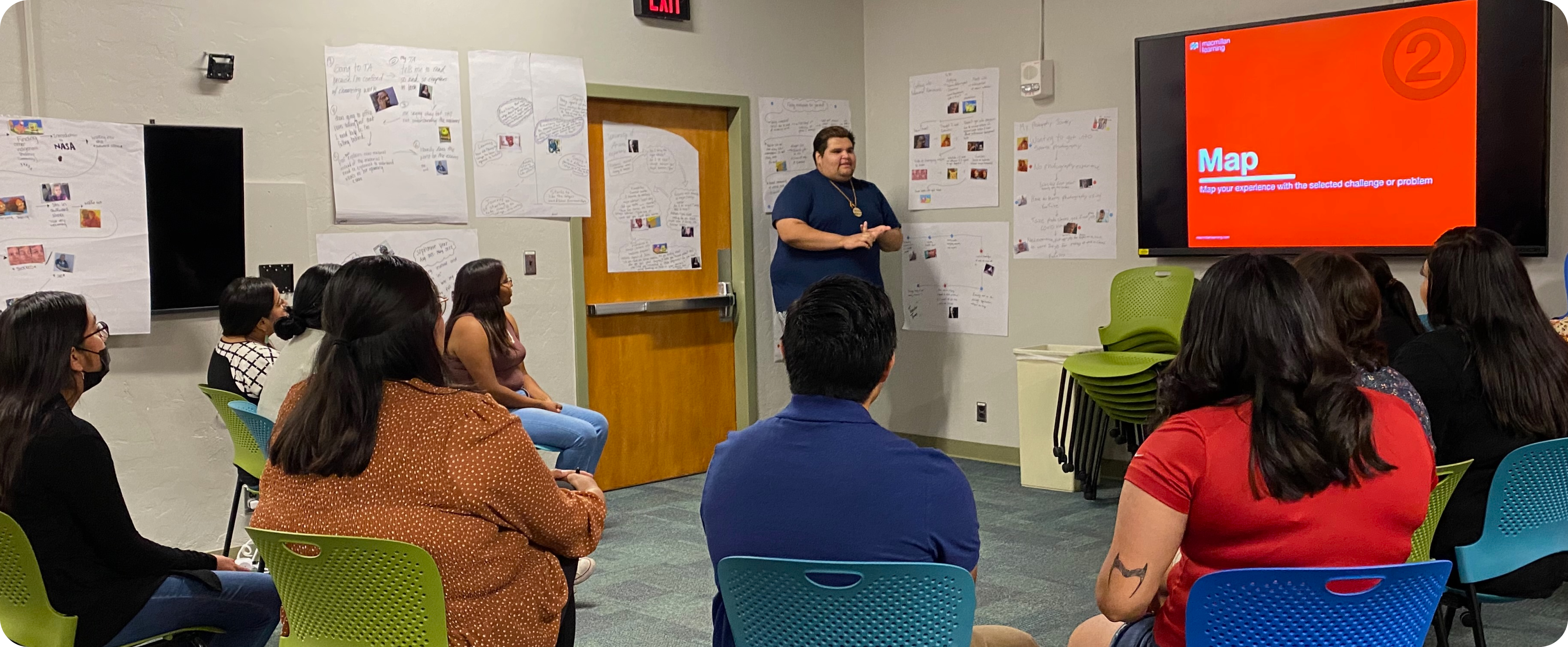
Phase 1 set out to continue the work that Macmillan had conducted up to this point and build upon the foundation of existing research. To do this, we conducted a number of remote and in-person co-creation sessions to try and untangle the problems that we were trying to solve. As someone not representative of the BLI-LI community, I walked into those sessions knowing the most important thing I could do was not assume. We weren't there to bring solutions, we were there because the students in those rooms were the only ones who could tell us what the right solution actually looked like.
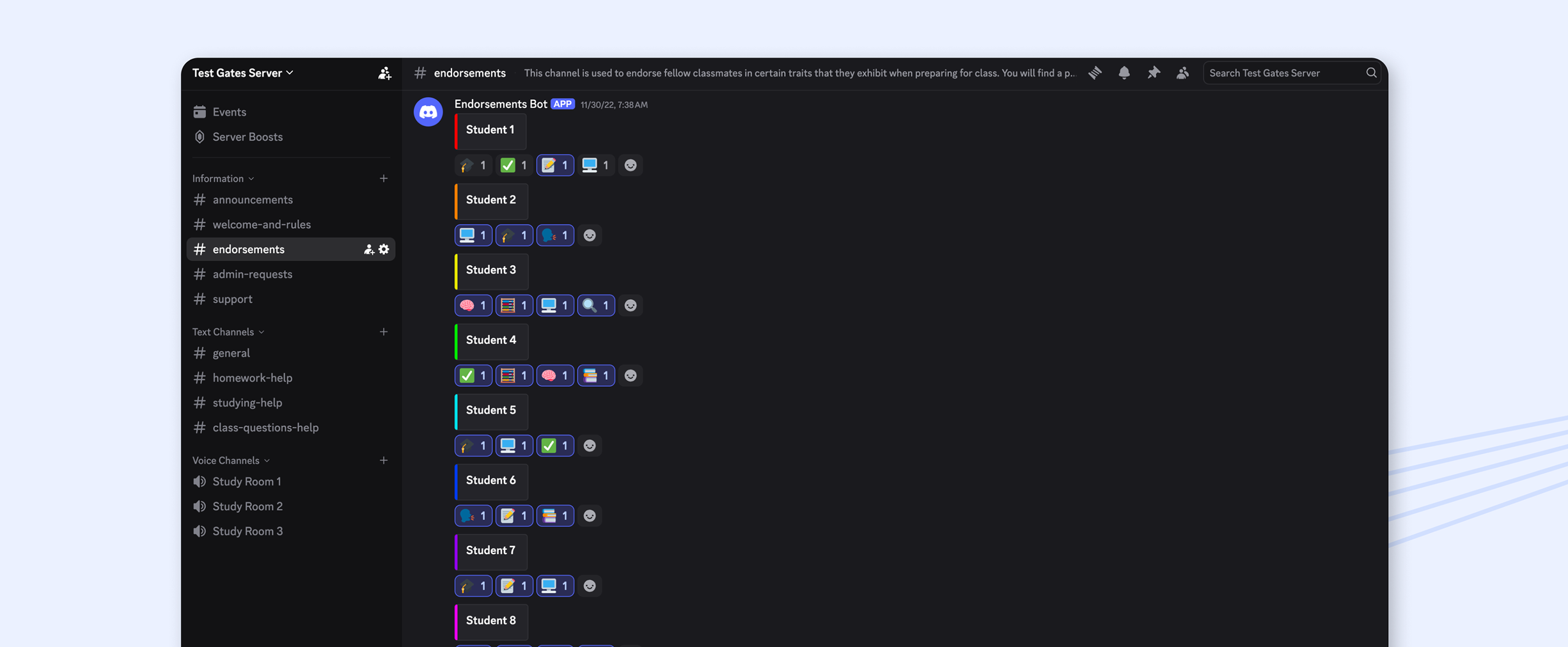
Following the up-front research, the next step of this phase was to put the grant's hypothesis into motion in a live course environment for the first time. The approach would be two tools that would be deployed together: a peer Resource Network built on Discord, where students could share resources, find classmates with complementary skills, and ask for help. And a Sentiment Survey that gave instructors a recurring pulse on how their students were doing emotionally as well as academically. Jacob and I co-designed with students and faculty from the start: participatory research, iterative feedback, and live testing shaped every decision before and during deployment.
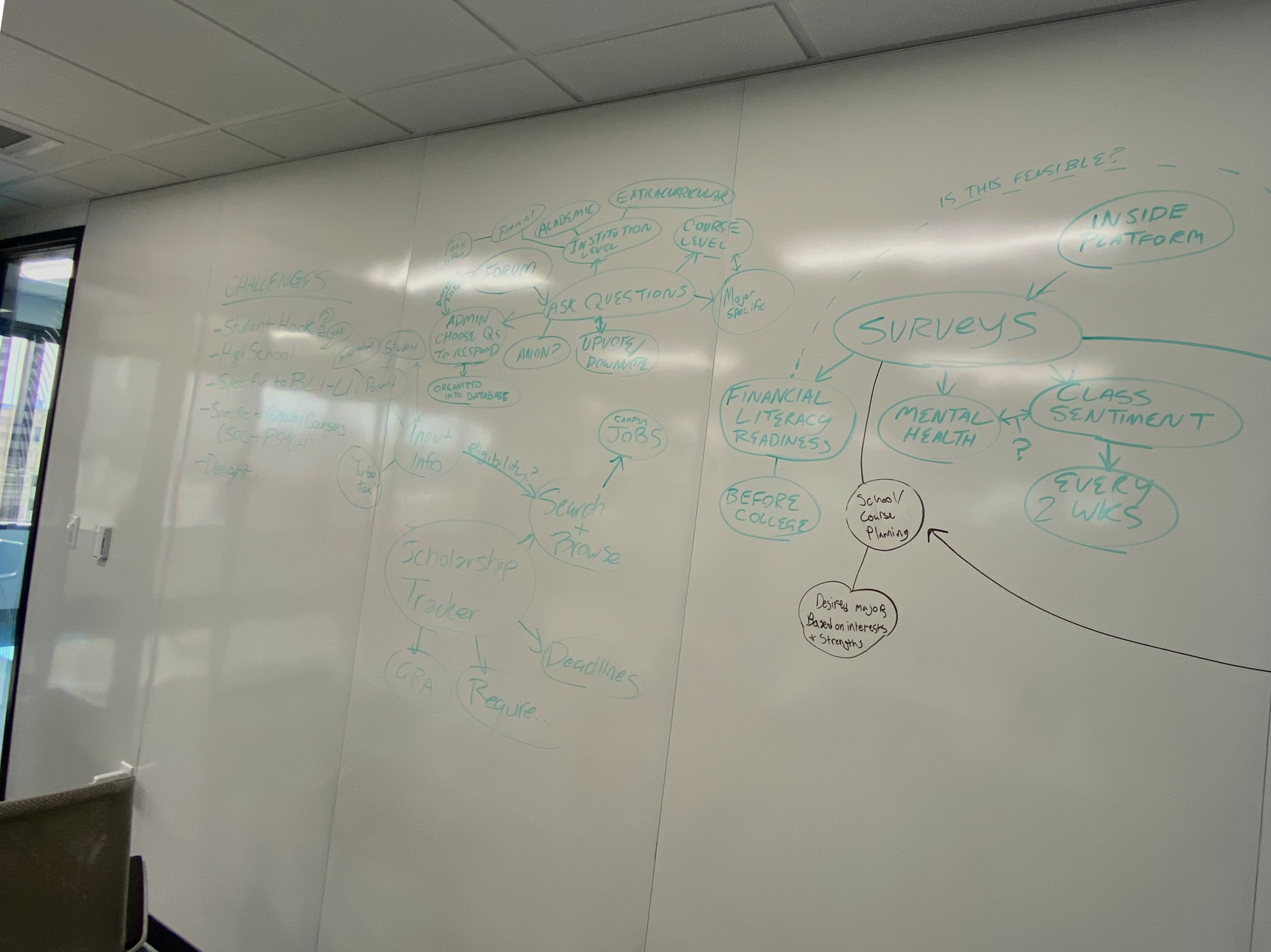
The Spring 2023 pilots gave us a wealth of information to build upon. Students were using the tools and while some reported value, engagement was inconsistent and hardly self-sustaining. Instructors had to actively drive students back in, and few returned on their own. The tools existed and were up and running, but it turned out that the problem they were solving might be the wrong one.
Six months of co-creation sessions, affinity mapping, and concept validation that produced two tools, the Resource Network and Sentiment Survey, and a deployment plan for the Spring 2023 classroom study.
View Full Case StudyThe summer of 2023 was spent out in the field. Our team traveled to four institutions across the country: Talladega College, Sul Ross State University, Santa Barbara City College, and Cerritos College where we conducted full-day workshops with students and faculty. For each visit, we conducted an instructor session in the morning where we focused on learning how instructors elicit collaboration in their classrooms through a modified service blueprint activity. Then we moved into the student sessions in the afternoon where we conducted gallery walks and ideation sessions to understand where the tools fell short in meeting their needs.
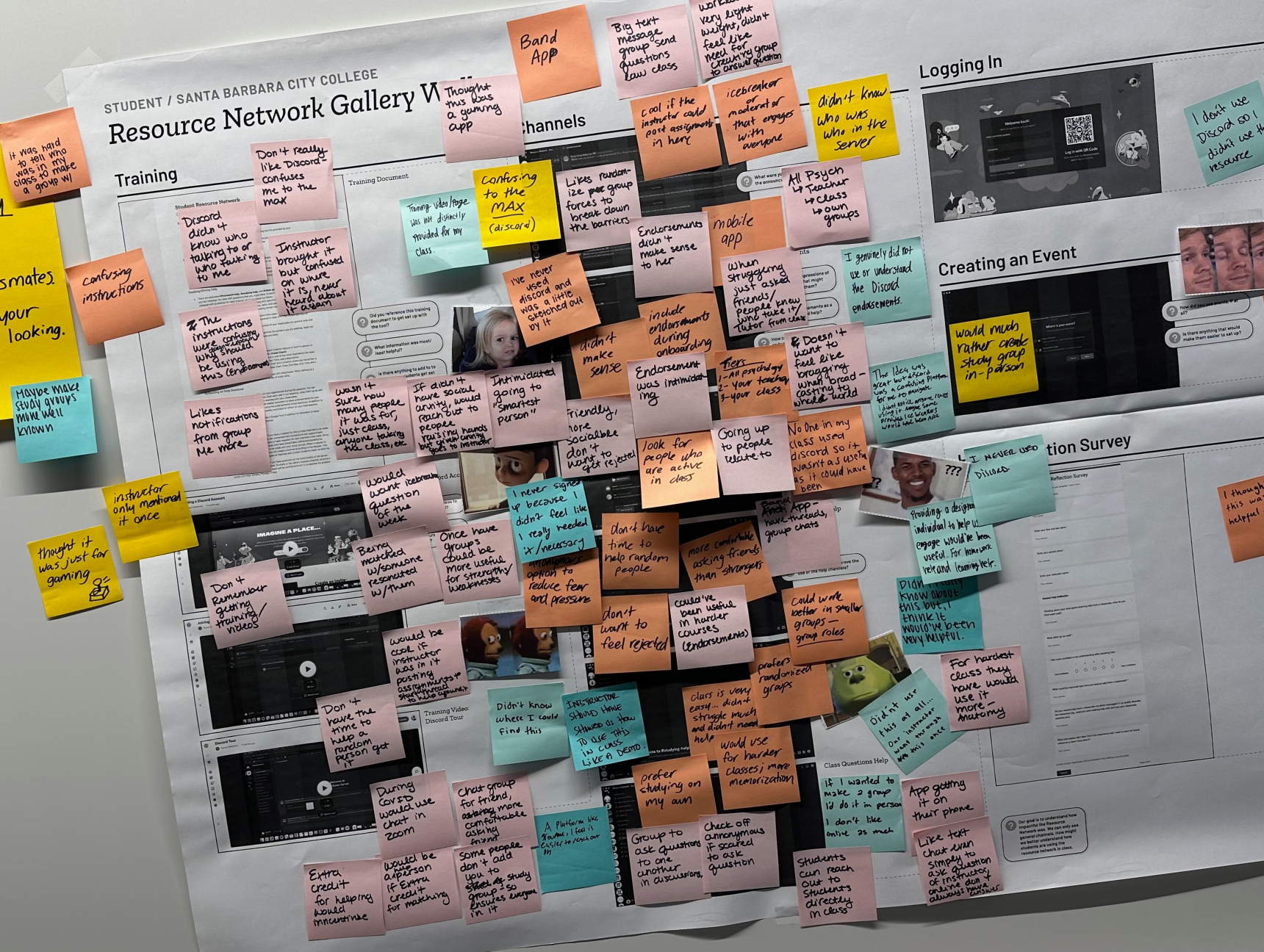
Across every school, students were saying the same thing: they didn't know the people they were being asked to collaborate with. Discord carried the wrong brand. Empty channels stunted engagement from the start. And most importantly, students weren't ready to ask a stranger for help. Before the tools as we created them could be useful, students needed to know their peers and feel like they belonged in the room.
"I need to know these people for me to feel comfortable to help or reach out for help."
— Student participant
That reframe was the turning point of the entire project. The Resource Network had been built around the assumption that students needed a better way to access help. While that may be true, they needed to believe that the person on the other side was someone that they could confide in and was safe to ask. We were solving for delivering help, when in reality we needed to lower the barrier of entry of reaching out in the first place.
From these learnings we rebuilt the tools. Spark, the redesigned peer connection tool, moved to FigJam, where the playful, collaborative nature felt more low-stakes by design. Weekly prompts asked students to share who they are as people, before they knew each other as classmates. Topics ranged from their interests and hobbies, to their habits and why they were in school. Pulse, the sentiment tool, was refined and rebranded. Both tools launched in the Fall 2023 with a more deliberate implementation pattern to ensure that the tools were more accessible than the last deployment. These strategies would lead us into the most exciting phase of the project, where we got to see the tools hit their stride and finally start to meet the needs of the student populations we set out to serve.
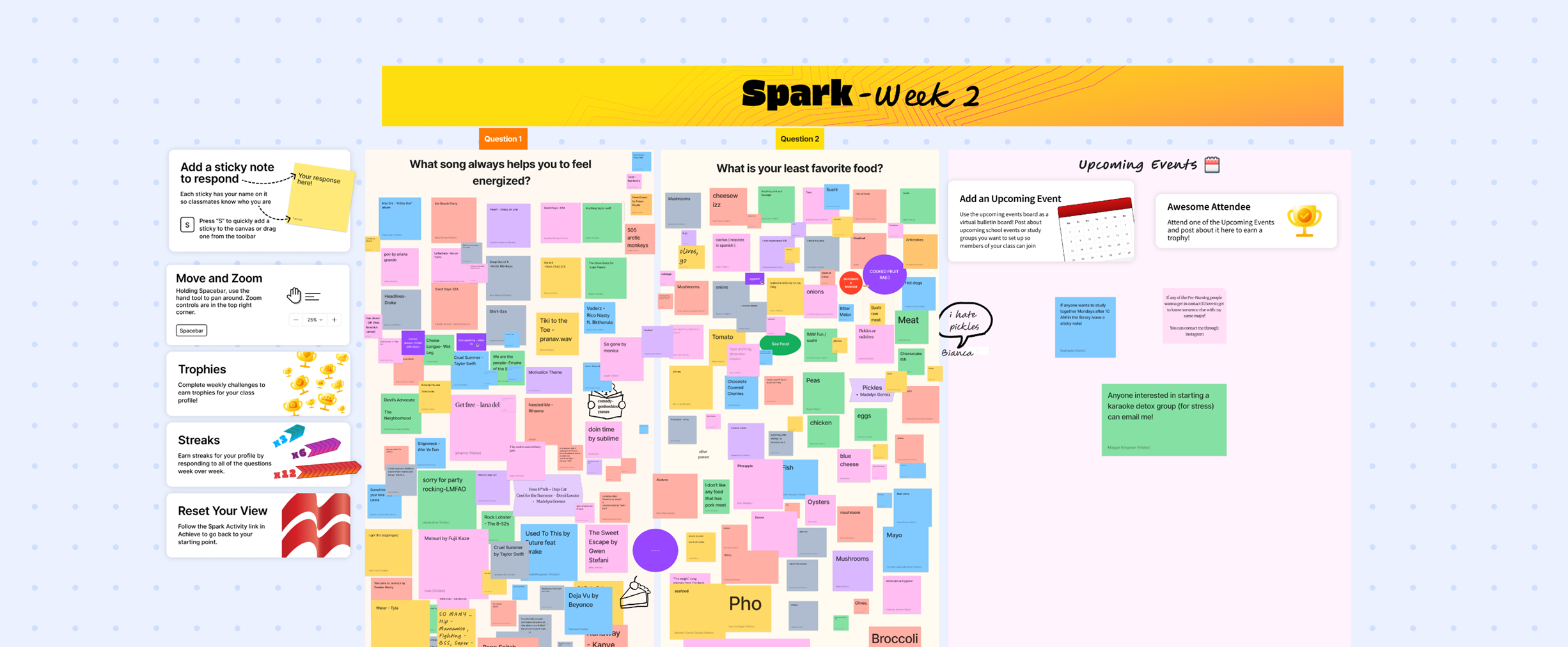
A summer of field research overturned our starting assumptions and led to a complete redesign — built not around better access to resources, but around helping students get to know each other.
View Full Case StudyThe Fall 2023 deployment answered the question Phase 2 had left open. Students who engaged with the redesigned tools tended to keep engaging. They were also doing things we hadn't designed for: leaving stickers and comments directly on their peers' responses in FigJam. It was exactly what the peer connection thesis would have predicted, and it was the clearest indication yet that we'd finally been solving the right problem.
"[The Spark activities] help you not feel like you are the only student in this class."
— Student Participant
That data did more than validate the design. When the engagement numbers came back showing Spark and Pulse outperforming every native resource inside Achieve, and a roughly 10x jump in sustained engagement over the original Resource Network, Macmillan decided they wanted to own the experience and build the tools natively inside their own platform. Three years into a grant-funded engagement, Spark and Pulse were put on the product roadmap.
"Pulse and Spark are now more frequently and consistently used than any internal Achieve resource. This is the first time we've seen this in our studies."
— Learning Scientist at Macmillan
Macmillan brought me back to lead the design of the Achieve pilot, translating an experience built for a visual FigJam canvas into something that felt native to a structured course environment, without losing what had made it work. The Achieve pilot launched in Fall 2025 and continued into Spring 2026 without my ongoing involvement. The concept was strong enough to carry forward on its own, which is about the best thing you can say about three years of work.
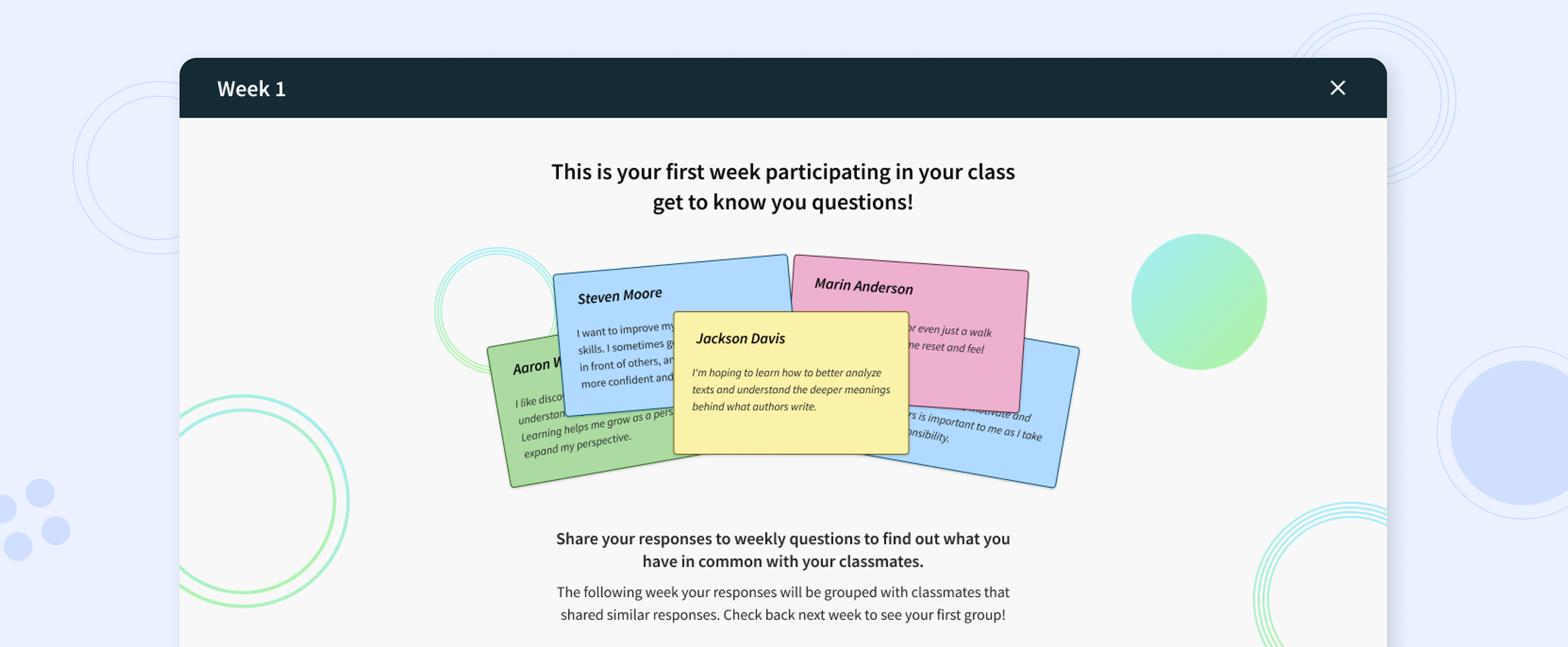
Two semesters of live classroom data validated the Phase 2 redesign, and the results were compelling enough that Macmillan committed to building both tools natively inside their platform.
View Full Case StudyPhase 1 taught us we were solving the wrong problem. Each phase after that allowed us to follow the research openly, while fine-tuning the tools to our findings along the way. Getting back into the field and letting the students tell us what we'd missed was what made the difference. What I didn't expect was how much this work would change how I think about who research is actually for. Three years of listening to students who had every reason not to trust us, and then watching them draw on each other's FigJam canvases and share things no prompt asked for. That's what solving the right problem actually looks like.